
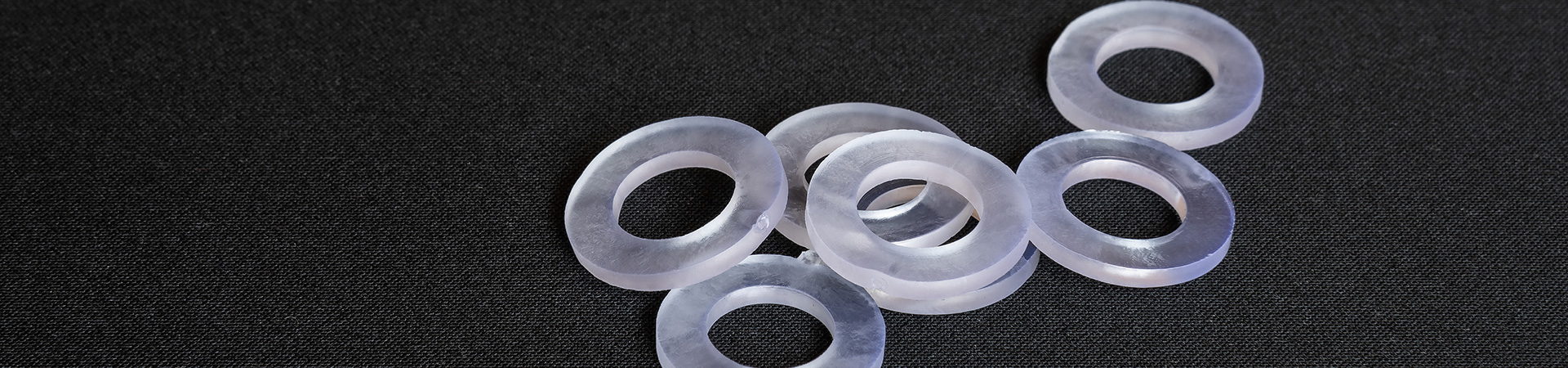
PTFE Extruded Rod is a high-performance engineering plastic manufactured through an extrusion process, resulting in a solid, cylindrical form. Known for its exceptional chemical resistance, low friction, and wide temperature tolerance, it is widely used in industries such as aerospace, chemical processing, and food manufacturing.
This material offers excellent electrical insulation properties and is inherently non-stick, making it ideal for applications requiring minimal maintenance and long service life.
| Property | Value | Test Method |
|---|---|---|
| Density | 2.15 - 2.20 g/cm³ | ASTM D792 |
| Tensile Strength | 20 - 35 MPa | ASTM D638 |
| Elongation at Break | 300 - 500% | ASTM D638 |
| Compressive Strength | 12 MPa | ASTM D695 |
| Coefficient of Friction | 0.04 - 0.10 | ASTM D1894 |
| Melting Point | 327°C | ASTM D3418 |
| Continuous Service Temperature | -200°C to +260°C | UL 746B |
| Dielectric Strength | 60 kV/mm | ASTM D149 |
| Diameter (mm) | Length (mm) | Tolerance |
|---|---|---|
| 5 - 10 | 1000 | ±0.2 mm |
| 10 - 25 | 1000 | ±0.3 mm |
| 25 - 50 | 1000 | ±0.5 mm |
| 50 - 100 | 1000 | ±0.8 mm |
| 100 - 200 | 500 | ±1.0 mm |
PTFE Extruded Rod demonstrates exceptional resistance to a wide range of chemicals, making it suitable for aggressive environments. The material maintains its structural integrity when exposed to most acids, bases, and organic solvents.
| Chemical | Resistance Rating | Maximum Temperature |
|---|---|---|
| Hydrochloric Acid | Excellent | 260°C |
| Sulfuric Acid | Excellent | 260°C |
| Nitric Acid | Excellent | 260°C |
| Sodium Hydroxide | Excellent | 260°C |
| Acetone | Excellent | 260°C |
| Ethanol | Excellent | 260°C |
PTFE Extruded Rod can withstand continuous temperatures up to 260°C (500°F) and short-term exposure up to 300°C (572°F). At extremely low temperatures, it remains flexible and functional down to -200°C (-328°F), making it suitable for cryogenic applications.
PTFE Extruded Rod offers superior chemical resistance compared to most engineering plastics like Nylon, PVC, or Polyethylene. Its non-stick properties and extremely low friction coefficient are unmatched by other materials. While it has lower mechanical strength than some reinforced plastics, its combination of properties makes it uniquely suitable for specific demanding applications.
Yes, PTFE Extruded Rod can be machined using standard metalworking equipment, though special considerations are necessary due to its soft nature. Sharp tools, proper cooling, and appropriate feed rates are essential for achieving good surface finishes. The material tends to deform under pressure, so proper fixturing is crucial during machining operations.
Yes, virgin PTFE is FDA compliant and suitable for food contact applications. However, it's important to ensure that no additives or fillers have been used that might compromise its food-grade status. The material's non-stick properties make it particularly useful in food processing equipment where easy cleaning and minimal product adhesion are required.
While PTFE has many advantages, it also has some limitations. The material has relatively low mechanical strength compared to metals and some reinforced plastics. It exhibits significant thermal expansion and has poor resistance to radiation. Additionally, PTFE can experience cold flow under continuous load, which may require design considerations for certain applications.
PTFE Extruded Rod should be stored in a clean, dry environment away from direct sunlight and heat sources. The material is sensitive to UV degradation, so prolonged exposure to sunlight should be avoided. When handling, use clean gloves to prevent contamination, and store rods horizontally on flat surfaces to prevent bending or deformation.
PTFE Extruded Rod finds applications across numerous industries including chemical processing (for seals, gaskets, and linings), semiconductor manufacturing (for high-purity components), food processing (for non-stick surfaces), aerospace (for low-friction bearings), and electrical (for insulation components). Its unique combination of properties makes it valuable wherever chemical resistance, low friction, or high-temperature performance is required.
PTFE cannot be welded using conventional thermal methods due to its high melting point and non-stick properties. Specialized techniques such as thermal bonding with compatible adhesives or mechanical fastening are typically used. The material's surface can be treated with sodium etching to improve adhesion, though this may affect some of its inherent properties.
PTFE Extruded Rod has an essentially indefinite shelf life when stored properly in appropriate conditions. The material does not degrade over time under normal storage conditions and maintains its properties for decades. However, exposure to UV radiation, extreme temperatures, or harsh chemicals during storage should be avoided to preserve optimal performance characteristics.
Yes, PTFE Extruded Rod is available in different grades including virgin PTFE (pure form), filled PTFE (with additives like glass, carbon, or bronze for enhanced properties), and various purity grades for specific applications. The choice of grade depends on the specific requirements of the application, such as mechanical strength, wear resistance, or chemical purity needs.
| Property | Standard Value | Units |
|---|---|---|
| Hardness, Shore D | 50 - 65 | - |
| Water Absorption | 0.01% | 24 hours |
| Thermal Conductivity | 0.25 | W/m·K |
| Specific Heat Capacity | 1.0 | J/g·K |
| Linear Thermal Expansion | 12 × 10⁻⁵ | cm/cm/°C |
| Flammability Rating | V-0 | UL 94 |