
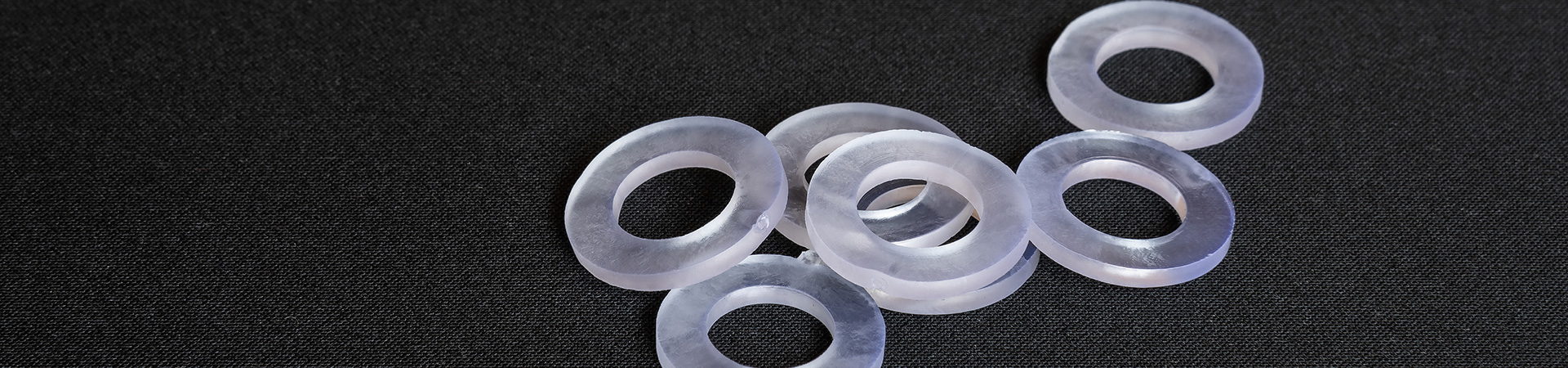
Polytetrafluoroethylene, more commonly known as PTFE, is a high-performance fluoropolymer widely recognized for its exceptional chemical resistance, low friction, and broad temperature tolerance. Among its various forms, the PTFE molded rod stands out as a fundamental stock shape used across countless industrial applications. Manufactured through a specialized molding and sintering process, these rods offer a unique combination of properties that make them indispensable in demanding environments where other materials fail.
The production of a PTFE molded rod begins with fine-grade PTFE resin. This resin is compressed under high pressure in a mold to form a "green" rod, which is then sintered at high temperatures. This heating process fuses the PTFE particles into a solid, homogeneous structure, resulting in a rod that is strong, durable, and possesses the full spectrum of PTFE's remarkable characteristics. From sealing components in aggressive chemical pumps to serving as low-friction bearings in food processing machinery, the versatility of the PTFE molded rod is nearly limitless.
Understanding the inherent properties of PTFE is crucial for selecting the right material for your application. Below is a detailed breakdown of its core characteristics.
Our PTFE molded rods are produced to the highest standards, ensuring consistency and reliability. The following tables detail our standard offerings.
| Standard Diameter (mm) | Standard Diameter (inches) | Standard Length (mm) | Standard Length (inches) |
|---|---|---|---|
| 5 mm | 0.20" | 1000 mm | 39.37" |
| 10 mm | 0.39" | 1000 mm | 39.37" |
| 12 mm | 0.47" | 1000 mm | 39.37" |
| 15 mm | 0.59" | 1000 mm | 39.37" |
| 20 mm | 0.79" | 1000 mm | 39.37" |
| 25 mm | 0.98" | 1000 mm | 39.37" |
| 30 mm | 1.18" | 1000 mm | 39.37" |
| 50 mm | 1.97" | 500 mm | 19.69" |
| 100 mm | 3.94" | 500 mm | 19.69" |
| 150 mm | 5.91" | 300 mm | 11.81" |
Note: Custom diameters and lengths are available upon request for larger volume orders.
| Property | Test Standard | Typical Value | Unit |
|---|---|---|---|
| Density | ASTM D792 | 2.15 - 2.20 | g/cm³ |
| Tensile Strength | ASTM D638 | 25 - 35 | MPa |
| Elongation at Break | ASTM D638 | 300 - 500 | % |
| Compressive Strength | ASTM D695 | 12 | MPa |
| Hardness, Shore D | ASTM D2240 | 50 - 65 | - |
| Coefficient of Friction (Dynamic) | ASTM D1894 | 0.05 - 0.10 | - |
| Continuous Service Temperature | - | -200 to +260 | °C |
| Melting Point | ASTM D3418 | 327 | °C |
| Thermal Conductivity | ASTM C177 | 0.25 | W/m·K |
| Dielectric Strength | ASTM D149 | 60 | kV/mm |
The unique property profile of PTFE molded rods makes them suitable for a diverse range of industries. Here are some of the most common applications.
What is the primary difference between a PTFE molded rod and a PTFE skived rod?
The primary difference lies in the manufacturing process. A PTFE molded rod is created by compressing PTFE resin in a mold and then sintering it, resulting in a solid, isotropic rod with consistent properties throughout its cross-section. A PTFE skived rod is first molded into a large billet and then "skived" or peeled on a lathe to create a continuous thin film, which is then wound onto a mandrel and sintered to form a rod. Molded rods are generally considered to have more uniform mechanical properties, while skived rods can be more economical for certain sizes and may have different grain orientation.
Can PTFE molded rods be machined easily?
Yes, PTFE is known for its excellent machinability. It can be easily turned, milled, drilled, and tapped using standard metalworking equipment. However, due to its softness and tendency to deform under pressure, sharp tools, high speeds, and proper workpiece support are recommended to achieve clean cuts and precise dimensions. Its low thermal conductivity means care must be taken to avoid overheating during machining.
What are the limitations of using a PTFE molded rod?
While PTFE has outstanding properties, it has some limitations. It has relatively low mechanical strength and load-bearing capacity compared to metals or reinforced plastics. It is susceptible to creep (cold flow) under sustained heavy loads. It has poor radiation resistance and can be degraded by high levels of gamma or electron beam radiation. Furthermore, it can be difficult to bond to other materials without specialized surface treatments like sodium etching.
Is PTFE safe for food contact and medical applications?
Yes, virgin, uncontaminated PTFE is biologically inert and is compliant with FDA (Food and Drug Administration) regulations for repeated food contact under Title 21 of the Code of Federal Regulations. It is also used in numerous medical devices and pharmaceutical processing applications. It is crucial to ensure that the specific grade of PTFE used has the necessary certifications and that it has not been blended with any non-compliant fillers.
How does temperature affect the properties of a PTFE molded rod?
PTFE maintains its excellent properties across a very wide temperature range. At cryogenic temperatures (down to -200°C), it remains flexible and tough. As temperature increases towards its upper service limit (+260°C), its tensile strength decreases slightly, and creep resistance is reduced. It is important to note that PTFE does not melt and flow like a conventional thermoplastic at its melting point (327°C) but transitions into a transparent gel. Prolonged exposure above 260°C can lead to thermal degradation and the release of toxic fumes.
Are there filled or modified grades of PTFE molded rods available?
Absolutely. To overcome certain limitations like creep and wear, PTFE is often compounded with various fillers. Common filled grades include Glass-Filled PTFE for improved wear resistance and compressive strength, Carbon-Filled PTFE for superior wear resistance and conductivity, Bronze-Filled PTFE for high load capacity and thermal conductivity, and Stainless Steel-Filled PTFE for enhanced hardness and wear. These filled grades offer tailored performance for specific, more demanding applications.
What is the best way to store PTFE molded rods?
PTFE molded rods should be stored in a clean, dry, and cool environment away from direct sunlight. They should be stored flat or vertically supported to prevent bending or deformation over time. Since PTFE is inert, it is not susceptible to degradation from moisture or most atmospheric conditions, but keeping it free from dust and physical damage is recommended for maintaining its quality before machining or use.