
Every sealing buyer has faced this moment: a PTFE Molded Sheet arrives with the correct thickness, width, and temperature rating, but the assembly team cannot make it stay fixed. Adhesives roll off, seams open under pressure, and the flange leaks during the first hydrotest. That is when the real question surfaces: How do you bond or weld PTFE molded sheet? PTFE molded sheet has a naturally low surface energy of about 18–20 dyn/cm, which gives it excellent non-stick properties and chemical resistance but also makes joining one of the most misunderstood steps in gasket fabrication. Without the right preparation, even high-performance epoxies fail. Without the correct welding speed and temperature, seams turn brittle or porous. This guide breaks down the exact surface treatments, adhesive systems, and welding parameters that convert this difficult material into a reliable sealing component. Whether you are sourcing cut gaskets, lining chutes, or fabricating expansion joints, the following sections give you a practical, procurement-focused roadmap.
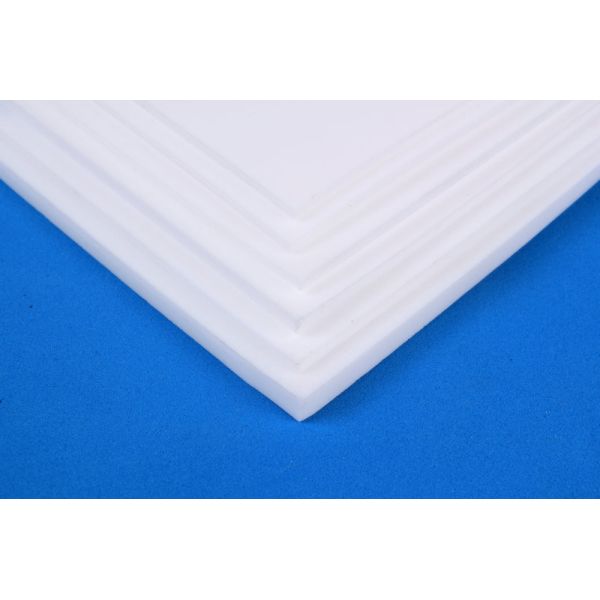
Picture a maintenance crew trying to attach a PTFE molded sheet to a reactor flange. They clean the surface, apply a premium epoxy, and clamp the joint overnight. The next morning, the adhesive peels away in one continuous film. This is not because the adhesive is weak; it is because PTFE molded sheet is engineered to repel almost everything. Its carbon-fluorine bonds create an extremely stable, low-energy surface that prevents wetting and mechanical interlocking.
The same chemistry that makes PTFE molded sheet perfect for corrosive chemicals also creates a hidden sourcing problem. Many buyers assume all PTFE molded sheet grades behave the same. In reality, virgin PTFE molded sheet, modified PTFE, and surface-treated PTFE respond differently to bonding and welding. Virgin PTFE has the highest chemical resistance but is the most difficult to join. Modified PTFE offers slightly better cold-flow resistance, while etched or sodium-treated PTFE provides a bondable surface. Ningbo Kaxite Sealing Materials Co., Ltd. supplies both virgin and modified PTFE molded sheet, and can provide surface treatment guidance before shipment, so your team does not have to solve the adhesion puzzle on the shop floor.
| PTFE Grade | Bondability | Weldability | Best Application |
|---|---|---|---|
| Virgin PTFE molded sheet | Requires etching | Use PFA/FEP rod | Aggressive chemical sealing |
| Modified PTFE molded sheet | Better after etching | Good with hot-gas | Creep-resistant gaskets |
| Etched PTFE molded sheet | Ready for adhesives | Not recommended | Bonded flange gaskets |
| Glass-filled PTFE | Limited | Difficult | Low-creep mechanical parts |
Before selecting a joining method, always confirm whether the sheet will operate in acid, solvent, high-temperature, or high-pressure conditions. Bonded joints often perform better in low-stress static sealing, while welded joints are preferred for dynamic or high-purity applications. This early decision determines the entire fabrication route.
A common failure scenario happens when a buyer purchases PTFE molded sheet, machines it, and immediately tries to bond it with a two-part epoxy. The joint fails within hours. The missing step is surface activation. Because PTFE molded sheet has a surface energy below 20 dyn/cm, adhesives cannot spread or anchor. Surface preparation raises the surface energy and creates reactive chemical sites, giving the adhesive something to grab.
The most reliable preparation method is sodium naphthalene etching, which replaces fluorine atoms on the surface with hydroxyl and carbonyl groups. This treatment produces a brownish surface and can raise bond strength by 10 to 20 times compared with untreated PTFE. Plasma treatment is cleaner for high-purity applications but may require immediate bonding. Abrasive roughening alone is not enough; it only changes the macroprofile, not the surface chemistry. For maximum reliability, many buyers specify factory-etched PTFE molded sheet from Ningbo Kaxite Sealing Materials Co., Ltd., which saves production time and reduces chemical handling risk.
| Surface Treatment | Surface Energy After Treatment | Bond Strength Improvement | Best Use | Limitations |
|---|---|---|---|---|
| Sodium naphthalene etch | 40–60 dyn/cm | High | Epoxy and polyurethane bonding | Darkens surface, limited pot life |
| Plasma treatment | 50–70 dyn/cm | Medium to high | High-purity or food-grade sealing | Must bond quickly after treatment |
| Abrasive + primer | 25–35 dyn/cm | Low to medium | Temporary fixture | Weak long-term adhesion |
| Flame treatment | 35–45 dyn/cm | Medium | Large sheet or field repair | Uneven treatment risk |
In a sealing workshop, the difference between success and failure is often a documented surface preparation procedure. If you are buying PTFE molded sheet for secondary bonding, request surface-treated material and full batch traceability from your supplier.
Imagine an engineer at a water treatment plant trying to bond PTFE molded sheet to a stainless steel flange. The first adhesive tested is cyanoacrylate, but it cures too rigid and cracks when the flange is torqued. The next test uses a flexible silicone sealant, which stays rubbery but cannot handle aggressive acids. Bonding PTFE molded sheet is not about finding the strongest glue; it is about matching the adhesive’s flexibility, chemical resistance, and service temperature to the sealing environment.
After proper surface etching, epoxy adhesives offer the highest shear strength and are suitable for rigid assemblies up to about 150°C. Polyurethane adhesives provide more flexibility and better peel strength, making them useful for expansion joints and lined pipe connections. Silicone adhesives work well for high-temperature static seals but have lower mechanical strength. If the application requires a wide service temperature range and strong chemical resistance, a two-part epoxy with a flexible backbone or a film adhesive can be a practical solution.
| Adhesive Type | Shear Strength on Etched PTFE | Temperature Range | Best For | Limitations |
|---|---|---|---|---|
| Epoxy | 10–20 MPa | -40°C to 150°C | Rigid flange sealing, cut gaskets | Rigid joint, surface etch required |
| Polyurethane | 5–12 MPa | -40°C to 100°C | Flexible joints, linings | Lower chemical resistance |
| Silicone | 2–5 MPa | -60°C to 250°C | High-temperature static seals | Low mechanical strength |
| Cyanoacrylate | 3–8 MPa | -30°C to 80°C | Small parts, temporary assembly | Brittle, weak peel strength |
When bonding PTFE molded sheet, always pretreat the surface, clean with isopropyl alcohol, and apply the adhesive within the specified open time. Bonded joints should be compressed under low uniform pressure to avoid air pockets that can become leak paths.
Welding PTFE molded sheet is not like welding PVC or polypropylene. Because PTFE does not flow like a thermoplastic melt at standard processing temperatures, direct hot-gas welding of virgin PTFE molded sheet often creates weak, porous seams. Field crews discover this when a sheet-lined tank is welded, inspected, and then leaks through pinholes along the seam. The solution is to use either a weldable PTFE grade, a PFA or FEP welding rod, or a controlled hot-gas welding method with correct temperature, speed, and gas flow.
Hot-gas welding with a PFA or FEP rod is the most practical route for field fabrication. The PTFE molded sheet surface is preheated to 350–400°C, and the rod is heated to the same range while the welder moves at 50–100 mm/min. Inert gas such as nitrogen or argon reduces oxidation and improves weld consistency. For higher-strength joints in a factory, infrared welding and hot-plate welding can achieve joint factors of 0.7–0.9. Ultrasonic welding is generally not recommended for thick PTFE molded sheet because the high-frequency vibration has difficulty transmitting through the low-loss material.
| Welding Method | Typical Temperature | Joint Factor | Best For | Key Requirement |
|---|---|---|---|---|
| Hot-gas with PFA/FEP rod | 350–400°C | 0.6–0.8 | Field repair, tank lining | Inert gas, preheating |
| Infrared welding | 380–420°C | 0.7–0.9 | Flat sheets, clean room | Precise gap control |
| Hot-plate welding | 370–400°C | 0.7–0.85 | Thicker molded sheet | Flat contact surface |
| Ultrasonic welding | Localized | 0.4–0.6 | Thin films only | Not suitable for thick sheet |
Weld quality depends heavily on sheet thickness consistency. Molded PTFE sheet with tight thickness tolerance produces uniform weld pressure and fewer voids. Ningbo Kaxite Sealing Materials Co., Ltd. manufactures PTFE molded sheet with controlled density and thickness, which supports more consistent welding results for sealing fabricators.
Procurement teams often face a simple but tough choice: should we bond or weld PTFE molded sheet? The answer depends on the joint’s mechanical load, chemical exposure, temperature, and whether the part will be installed in the field or fabricated in a controlled shop. In a chemical plant, a large vessel lining may be welded because adhesives cannot survive continuous acid immersion. In a clean-room gasket operation, bonding may be better because welding introduces thermal stress and rod material that may affect purity.
Bonding usually requires less capital investment and is easier for small, flat gaskets. However, bonded joints are only as strong as the adhesive layer and may fail at temperatures above the adhesive’s service limit. Welding creates a more homogeneous fluoropolymer joint and can match the chemical resistance of the base sheet, but it requires skilled operators and precise temperature control. The table below summarizes the key selection parameters.
| Parameter | Bonding PTFE Molded Sheet | Welding PTFE Molded Sheet |
|---|---|---|
| Joint strength | Medium, depends on adhesive | High, near base sheet if optimized |
| Chemical resistance | Limited by adhesive | Excellent, fluoropolymer-based |
| Temperature resistance | Up to 150–250°C depending on adhesive | Up to 260°C continuous |
| Equipment cost | Low to medium | Medium to high |
| Operator skill | Low to medium | High |
| Field repair | Possible with prepared surface | Possible with hot-gas gun |
| Typical cycle time | Minutes to hours with curing | Immediate after cooling |
A practical approach is to test both methods on sample plaques of the exact PTFE molded sheet you plan to purchase. Measure tensile strength and leak tightness under your operating conditions before committing to production. Suppliers with technical support, such as Ningbo Kaxite Sealing Materials Co., Ltd., can often provide material data and application guidance that shortens this evaluation.
A procurement scenario: you need 3 mm PTFE molded sheet for gaskets that will be adhesive-bonded to metal flanges. Three quotes arrive. One supplier offers the lowest price but cannot guarantee surface treatment. Another offers surface-treated sheet but with a wide thickness tolerance of ±0.3 mm. The third supplier asks about operating temperature, chemical media, and whether you need factory etching. That third approach is the one that prevents production delays.
When selecting PTFE molded sheet for bonding or welding, check four things. First, confirm whether the sheet is virgin or modified PTFE. Virgin PTFE gives the best chemical resistance but requires etching before bonding. Modified PTFE may weld slightly better and resist creep in flanged joints. Second, ask for thickness tolerance and density. Consistent thickness improves adhesive bond line control and welding pressure uniformity. Third, request surface treatment documentation if you plan to bond. Fourth, specify sheet width and roll length to avoid unnecessary seams.
| Specification | Typical Value for Molded PTFE Sheet | Why It Matters |
|---|---|---|
| Thickness range | 1–100 mm | Affects gasket compression and weld time |
| Density | 2.10–2.20 g/cm³ | Higher density improves weld strength |
| Tensile strength | 15–35 MPa | Indicates sheet handling durability |
| Elongation at break | 200–400% | Useful for formed or lined parts |
| Temperature range | -200°C to +260°C | Defines continuous service limit |
Ningbo Kaxite Sealing Materials Co., Ltd. helps buyers avoid the common mismatch between sheet grade and joining method. The company offers cut-to-size PTFE molded sheet, factory surface treatment options, and technical data that align with your gasket or lining process.
Q: How do you bond or weld PTFE molded sheet for a flange gasket that sees both acid and steam?
A: For this mixed condition, start with a sodium-etched PTFE molded sheet to prepare the bonding surface. Use a chemical-resistant, high-temperature epoxy rated for at least 150°C if the joint will be static and clamped. Apply the adhesive within 30 minutes after surface preparation, then assemble the gasket before the adhesive skins over. If the flange sees continuous steam above 180°C, welding with a PFA welding rod is usually more reliable. Hot-gas welding at 350–400°C with nitrogen shielding creates a fluoropolymer-only joint that will not degrade in acid or steam. The key is to preheat the PTFE molded sheet and move at a controlled speed of 50–100 mm/min to avoid pinholes. This two-path answer covers both low-temperature bonded joints and high-temperature welded joints.
Q: How do you bond or weld PTFE molded sheet when the installation must be done on-site and the environment is not perfectly clean?
A: On-site conditions favor bonding with a forgiving adhesive after mechanical and chemical surface preparation. Clean the PTFE molded sheet with isopropyl alcohol, lightly abrade with fine silicon carbide paper, then apply a two-part polyurethane adhesive. Polyurethane tolerates slight surface contamination better than epoxy and provides enough flexibility for field-assembled flanges. If the process requires a fully welded seam, use a portable hot-gas welder with a PFA rod and nitrogen purge. Cover the work area with a simple wind shield to keep dust and moisture away from the weld zone. Preheating the sheet to 120–150°C before welding also reduces condensation on the surface. Both approaches keep production moving without sacrificing joint integrity.
Many bonding and welding failures begin with the material, not the technique. A sheet with internal porosity, inconsistent density, or unreported resin grade will never produce a uniform joint. Ningbo Kaxite Sealing Materials Co., Ltd. addresses this by manufacturing PTFE molded sheet under controlled molding conditions and offering both virgin and modified grades. Buyers can order sheet in custom thicknesses up to 100 mm, with cut-to-size dimensions and factory surface treatment for bonding applications.
The company’s technical team supports sealing fabricators by recommending the right sheet density for hot-plate welding, the correct etching grade for epoxy bonding, and the preferred PFA or FEP welding rod compatibility. This practical guidance removes guesswork from the procurement process and helps you buy with confidence. For high-volume gasket programs, Ningbo Kaxite Sealing Materials Co., Ltd. can supply consistent batch-to-batch quality with full traceability documentation.
If your sealing project requires PTFE molded sheet that bonds reliably, welds cleanly, or fits exact dimensional tolerances, contact the engineers at Ningbo Kaxite Sealing Materials Co., Ltd. today. As a specialist manufacturer of PTFE molded sheet and finished gaskets, Ningbo Kaxite Sealing Materials Co., Ltd. provides custom thicknesses, surface treatment options, and technical guidance to help you achieve strong, leak-free joints. For a fast quotation or bonding/welding advice, email [email protected].
Ebnesajjad, S., 2015, "Surface Treatment of Fluoropolymers for Adhesive Bonding," Journal of Adhesion Science and Technology, Vol. 29, No. 12, pp. 1212-1228.
Shi, Y., Zhang, Z., & Su, Z., 2018, "Plasma modification of PTFE surfaces for enhanced adhesion," Applied Surface Science, Vol. 430, pp. 224-231.
Mittal, K. L., 2009, "Adhesion Aspects of Polymeric Coatings," Journal of Adhesion Science and Technology, Vol. 23, No. 7-8, pp. 1013-1025.
Drobny, J. G., 2014, "Technology of Fluoropolymers," Progress in Polymer Science, Vol. 39, No. 4, pp. 683-708.
Frick, A., & Schmid, M., 2016, "Joining of polytetrafluoroethylene by means of heat-assisted methods," Polymer Engineering and Science, Vol. 56, No. 9, pp. 1003-1011.
Wakida, T., Lee, M., & Park, S., 2020, "Surface treatment of PTFE films using atmospheric pressure plasma," Surface and Coatings Technology, Vol. 388, 125591.
Hopkins, J., & Lewis, D., 2012, "Adhesive bonding of fluoropolymers: influence of sodium etching on bond durability," International Journal of Adhesion and Adhesives, Vol. 35, pp. 69-74.
Kim, S. H., & Kim, K. J., 2019, "Friction stir welding of fluoropolymer sheets," Journal of Materials Processing Technology, Vol. 270, pp. 198-206.
Lu, C., Wang, H., & Chen, X., 2021, "Hot gas welding of PTFE-lined equipment: process optimization and joint characterization," Journal of Fluorine Chemistry, Vol. 245, 109772.
Perrin, F. X., & Nguyen, T. P., 2017, "Surface modifications of poly(tetrafluoroethylene) and their effect on adhesion," Progress in Organic Coatings, Vol. 108, pp. 45-57.
-