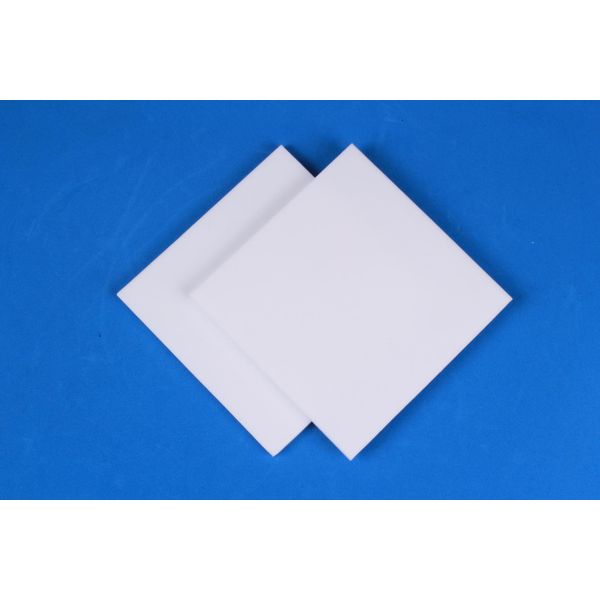

Imagine you are reviewing two quotes for PTFE gasket material. One supplier offers a skived PTFE sheet with a dense, smooth surface. The other offers expanded PTFE with a soft, spongy feel. Your maintenance team wants a material that seals quickly, but your engineering team worries about blowouts and creep. How does PTFE Skived Sheet compare to expanded PTFE? In simple terms, skived PTFE is shaved from a solid PTFE billet, giving it higher density, higher tensile strength, and better resistance to cold flow under load. Expanded PTFE is stretched into a microporous structure, making it softer, more compressible, and better at filling rough or damaged flange surfaces. The choice is rarely about which material is “better” overall; it is about matching the material to the flange pressure, temperature, chemical exposure, and surface finish. At Ningbo Kaxite Sealing Materials Co., Ltd., we help procurement teams and engineers avoid mismatched gasket specifications by supplying both materials with clear technical data. This guide breaks down the comparison step by step so you can specify the right sheet with confidence.
Procurement teams often receive data sheets that list “PTFE” as if all forms are identical. That is a costly mistake. Skived PTFE and expanded PTFE share the same base polymer, but their manufacturing processes create very different physical properties. Skived PTFE is cut from a molded or extruded billet under controlled conditions, which preserves a dense structure. Expanded PTFE is stretched during processing, creating a network of micro-fibers and pores. This difference drives everything from tensile strength to gas permeability.

The table below gives a quick reference for your selection process.
| Property | Skived PTFE Sheet | Expanded PTFE Sheet | Practical Impact |
|---|---|---|---|
| Density (g/cm³) | 2.1–2.2 | 0.5–1.0 typical | Skived is denser and less permeable |
| Tensile strength (MPa) | 20–35 | 5–15 | Skived withstands higher bolt load |
| Elongation (%) | 250–400 | 100–250 | Both flexible; expanded conforms more easily |
| Creep resistance | Higher | Lower | Skived preferred for sustained load |
| Sealability on rough flanges | Moderate; requires flat surface | Excellent; fills irregularities | Expanded reduces leak risk on damaged flanges |
| Temperature range | -200°C to +260°C | -200°C to +260°C | Same base polymer limits |
Pain point: A food processing plant replaces spiral-wound gaskets with soft expanded PTFE sheets on a high-pressure steam line. After three months, the gaskets thin out, bolt torque drops, and a small leak appears. The buyer is blamed for choosing a cheaper material, but the real issue is creep relaxation under sustained load.
Solution: For flanges with bolt loads above 20 MPa or applications with pressure cycles, skived PTFE is the safer choice. Its dense structure resists cold flow, meaning the gasket maintains thickness and bolt stress over time. Expanded PTFE is better suited for low-to-medium loads, large-diameter flanges, and situations where surface finish is poor. Ningbo Kaxite Sealing Materials Co., Ltd. stocks both virgin and filled skived PTFE sheets to handle higher load conditions without custom delays.
Pain point: A chemical distributor needs gaskets for acid transfer lines. The data sheet says both skived and expanded PTFE offer excellent chemical resistance. But after installation, one gasket discolors and leaks. The buyer assumed all PTFE grades perform the same in aggressive media.
Solution: Base chemical resistance is nearly identical because both materials are made from polytetrafluoroethylene. They resist strong acids, solvents, and oxidizing agents across -200°C to +260°C. The practical difference is permeation. Expanded PTFE has a porous structure, so it can absorb small amounts of aggressive media and allow slightly higher vapor transmission. Skived PTFE has a tighter structure, so it is better for high-purity or high-vacuum systems. When you send your full chemical list to Ningbo Kaxite Sealing Materials Co., Ltd., our engineers help you confirm compatibility and select the correct grade.
Pain point: A steel fabricator struggles with leaking flanges on large-diameter, slightly pitted heat exchanger covers. Maintenance workers use skived PTFE sheets, but they cannot achieve a leak-free seal because the rigid sheet cannot fill surface defects. Production downtime increases.
Solution: Expanded PTFE is the better fit in this scenario. Its microporous structure compresses easily under low bolt load and recovers well after thermal cycles, filling scratches, weld seams, and flange irregularities. Skived PTFE remains the right choice for flat, machined surfaces that require a tight, non-porous barrier. A useful rule: if the flange looks like it has been in service for years and has visible pitting, choose expanded PTFE. If the flange is new or highly polished, skived PTFE gives a cleaner, longer-lasting seal.
Pain point: A purchasing manager is asked to cut gasket costs by 15 percent. The supplier recommends switching from skived to expanded PTFE, but the manager does not know if the savings will hold up in service.
Solution: Expanded PTFE is often perceived as lower cost by volume, but total cost depends on thickness, size, and waste. Skived PTFE is easier to machine into tight-tolerance rings and complex shapes, and it produces less scrap in CNC cutting. Expanded PTFE can be cut easily by hand, which reduces installation time but may require thicker sheets to compensate for compression. At Ningbo Kaxite Sealing Materials Co., Ltd., we supply both materials in standard and custom thicknesses, so you can compare real cost per gasket rather than just cost per sheet.
Choosing between skived and expanded PTFE does not have to be a guessing game. Ningbo Kaxite Sealing Materials Co., Ltd. is a sealing materials manufacturer that provides both skived PTFE sheet and expanded PTFE sheet with clear technical specifications, batch traceability, and fast custom cutting. When you send us your operating conditions—pressure, temperature, flange type, and chemical media—we recommend the right material instead of just quoting a part number. Our goal is to reduce your leakage risk, total procurement cost, and installation downtime. We can also supply filled skived PTFE sheets with glass, carbon, or bronze for higher load or wear applications, and expanded PTFE with adhesive backing for easy installation.
Skived PTFE sheet shows significantly higher tensile strength, typically 20 to 35 MPa, compared with 5 to 15 MPa for expanded PTFE. Skived PTFE also has a denser structure that resists cold flow and creep relaxation better under sustained bolt load. If your flange operates at high pressure or high temperature for long periods, skived PTFE is usually the safer choice. Expanded PTFE may compress and lose bolt load over time, especially above 20 MPa or in fluctuating thermal cycles.
Expanded PTFE is generally easier to seal on rough, pitted, or misaligned flanges because its compressible microporous structure fills surface defects and requires lower bolt load to conform. Skived PTFE is stiffer and works best on flat, machined, or new flange surfaces where a dense, low-permeability barrier is more important. For damaged flanges or large-diameter covers with visible irregularities, expanded PTFE often reduces leak rates and installation time. For clean, high-purity flanges, skived PTFE offers better chemical barrier performance.
Still not sure which PTFE grade fits your flange? Leave a comment below or send your operating conditions to our sealing specialists. We will help you compare skived PTFE sheet and expanded PTFE based on your actual pressure, temperature, and surface finish.
Ningbo Kaxite Sealing Materials Co., Ltd. is a reliable PTFE sheet and sealing materials manufacturer offering skived PTFE sheets, expanded PTFE sheets, filled PTFE sheets, and custom-cut gaskets. With years of sealing industry experience and a focus on technical support, we help procurement teams select the right material for chemical processing, food and beverage, pharmaceutical, and general industrial applications. Visit https://www.ptfe-gasket.net to explore our product range, or email [email protected] for a fast technical recommendation and quotation.
1. P. J. Rae, D. M. Dattelbaum, 2004. The properties of poly(tetrafluoroethylene) (PTFE) in compression. Polymer, 45(22), 7615–7625.
2. N. S. M. El-Tayeb, K. Y. Low, 2009. Friction and wear behaviour of PTFE and PEEK composites. Wear, 266(1–2), 220–225.
3. T. A. Blanchet, F. E. Kennedy, 1992. Sliding wear mechanism of polytetrafluoroethylene (PTFE) and PTFE composites. Wear, 153(1), 229–243.
4. M. Conte, B. Piglionico, 2013. PTFE based gaskets for flanged joints: creep relaxation behaviour. International Journal of Pressure Vessels and Piping, 105–106, 31–37.
5. H. Unal, U. Sen, A. Mimaroglu, 2004. Dry sliding wear characteristics of some industrial polymers against steel counterface. Tribology International, 37(9), 727–732.
6. J. A. Sauer, K. D. Pae, 1975. The flow of polytetrafluoroethylene at high pressures. Journal of Applied Polymer Science, 19(11), 3321–3332.
7. S. Ebnesajjad, 2000. Fluoroplastics, Volume 1: Non-Melt Processible Fluoroplastics. Plastics Design Library, Norwich, NY.
8. R. K. Flitney, 2007. Seals and Sealing Handbook, 5th edition. Elsevier, Oxford.
9. A. A. O. B. Barros, L. F. B. Malta, F. G. Souza, 2019. Expanded polytetrafluoroethylene: structure and properties. Materials Research, 22(4), e20180675.
10. H. S. White, 1956. Small oil-free bearings. Journal of Research of the National Bureau of Standards, 57(4), 185–196.
-