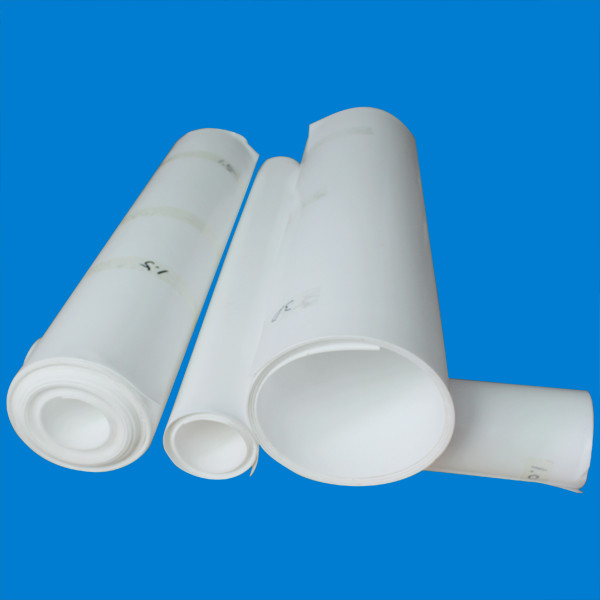
Are Machine Tool Guide Belts Suitable for High-Speed or Heavy-Load Machining? Picture a plant manager who has just promised a customer a shorter cycle time, a tooling engineer who is fighting chatter on a hard-metal job, and a procurement specialist who has already seen two guide-belt failures this quarter. The question is no longer theoretical. High-speed machining raises heat, friction, and vibration, while heavy-load machining raises pressure, shock, and tracking stress. A guide belt that feels fine on a light finishing cell can become the weak link when speeds climb or cutting forces surge. The real answer depends on material compound, reinforcement, geometry, tension control, guideway condition, and the way the belt is matched to the machine’s duty cycle. At Ningbo Kaxite Sealing Materials Co., Ltd., we help buyers move past “yes or no” and into a documented selection process: define the load case, confirm the speed envelope, check friction and wear targets, and validate the belt with samples before the purchase order is released. This guide gives procurement teams a practical way to judge machine tool guide belts for high-speed and heavy-load machining, compare parameters, and avoid hidden downtime costs.
Why High-Speed and Heavy-Load Machining Punishes Guide Belts
Pain point scenario: A shop starts running a harder alloy or a higher spindle speed, and the first symptoms look small: a faint vibration, a little more tension adjustment, a dark wear mark near the edge. Then positioning repeatability drifts, scrap rises, and maintenance finds that the Machine Tool Guide Belt has stretched, glazed, or worn unevenly. Buyers often see this as a belt quality issue, but it is usually a duty-cycle mismatch.
Solution path: Treat the guide belt as a tribological component, not a simple accessory. Confirm the actual speed, load, acceleration, coolant exposure, and guideway finish. Then match a low-friction, dimensionally stable compound with the right reinforcement and tension window. Kaxite supports this by reviewing the application and recommending a belt construction that fits the machine’s real operating profile.
Operating demand
Common failure signal
Procurement check
High slide velocity
Heat buildup, glazing, friction rise
Confirm friction coefficient and continuous speed rating
Heavy cutting force
Edge creep, compression set, tracking loss
Review compressive strength and reinforcement
Coolant and chips
Swelling, contamination, uneven wear
Match compound to fluid and chip environment
Frequent acceleration
Tension drift and micro-slip
Validate tension window and installation method
Material and Geometry Selection: What Purchasing Teams Should Verify
Pain point scenario: A buyer receives two quotations for “PTFE guide belts” with very different prices. The drawings look similar, but one supplier has ignored reinforcement, edge finish, thickness tolerance, and the machine’s load direction. Six weeks later, the lower-cost belt may fit the budget but fail the uptime target.
Solution path: Ask for measurable parameters, not general claims. Compare the base compound, filler system, fabric or fiber reinforcement, surface finish, thickness tolerance, and recommended tension. Ningbo Kaxite Sealing Materials Co., Ltd. can supply application-focused machine tool guide belts and sealing materials with documented dimensional and performance data so procurement can compare offers on the same basis.
Parameter
Why it matters
Typical target to confirm
Base material
Controls friction, chemical resistance, and wear
PTFE compound matched to coolant and load
Reinforcement
Limits creep and maintains tracking under load
Woven or fiber reinforcement for heavy duty
Thickness tolerance
Affects preload, clearance, and repeatability
Tight, inspectable tolerance band
Friction coefficient
Influences heat, stick-slip, and drive load
Low and stable under the actual speed
Temperature range
Prevents softening, swelling, or hardening
Continuous and peak values confirmed
Are Machine Tool Guide Belts Suitable for High-Speed Machining?
Pain point scenario: A high-speed cell runs at a rapid traverse rate that looks acceptable on paper, but the belt heats up during long shifts. Operators hear a slight squeal, the drive current rises, and the finish begins to wander. The belt has not broken, yet it is already affecting quality.
Solution path: Yes, machine tool guide belts can be suitable for high-speed machining when friction, heat, balance, and tension are controlled. Choose a low-friction compound, confirm the speed limit for the actual contact pressure, keep the guideway clean, and validate tension after the first heat cycle. Kaxite reviews speed profiles and recommends belt grades that reduce stick-slip and heat-driven drift.
High-speed factor
Risk if ignored
Practical recommendation
Slide velocity
Heat and friction rise
Select low-friction PTFE grade and confirm speed
Vibration
Chatter and edge wear
Check guideway alignment and belt tracking
Tension stability
Micro-slip and positioning drift
Re-tension after warm-up; document values
Coolant film
Contamination and uneven friction
Confirm chemical compatibility and cleaning plan
Are Machine Tool Guide Belts Suitable for Heavy-Load Machining?
Pain point scenario: A heavy-cut job runs well for the first week, then the table starts to hesitate during acceleration. Maintenance finds the belt edge compressed and the guide surface polished in one narrow band. The cutting force is not the only problem; the belt was never specified for sustained pressure and shock loading.
Solution path: Yes, machine tool guide belts can work in heavy-load machining when the construction resists compression set and the installation prevents edge loading. Use reinforced material, verify flatness and support, control tension carefully, and inspect for embedment. Kaxite helps buyers match belt thickness, reinforcement, and compound to the load case before a full production order is placed.
Heavy-load factor
Risk if ignored
Parameter to verify
Compressive load
Creep and thickness loss
Compression set and reinforced construction
Shock loading
Edge cracking and tracking loss
Edge quality and impact-resistant compound
Guideway flatness
Local wear and uneven pressure
Flatness, surface finish, and contact pattern
Lubrication condition
Stick-slip and heat
Compatibility with fluid and cleaning method
Installation, Tension, and Maintenance Checklist
Pain point scenario: Two identical belts go into two similar machines. One lasts six months; the other fails in six weeks. The difference is often installation: a sharp edge, uneven tension, contaminated guideway, or missing re-tension step after the first shift.
Solution path: Build a simple handover checklist. Clean the guideway, inspect edges, install without twisting, apply the specified tension, run a warm-up cycle, and re-check tracking. Record the values so the next buyer can compare performance instead of relying on memory. Kaxite can provide handling guidance and sample evaluations to support this process.
Checkpoint
What to inspect
Acceptance note
Guideway condition
Chips, burrs, rust, oil film
Clean and smooth before belt contact
Belt tracking
Edge alignment and twist
Full contact without edge loading
Tension
Initial and warm-up values
Recorded and within supplier window
First-shift review
Wear marks, heat, drive current
No glazing, squeal, or tension drift
FAQs: High-Speed and Heavy-Load Guide Belt Selection
Q1: Are machine tool guide belts suitable for high-speed machining above 15,000 rpm? A1: They can be suitable when the belt is matched to the actual slide velocity, contact pressure, and heat exposure. A low-friction PTFE compound, stable reinforcement, clean guideway, and verified tension are essential. Ningbo Kaxite Sealing Materials Co., Ltd. can review the speed profile and recommend a belt grade for sample testing before production release.
Q2: Are machine tool guide belts suitable for heavy-load machining with high cutting forces? A2: Yes, if compression set, edge loading, and guideway flatness are controlled. Buyers should request reinforced construction, thickness tolerance data, and installation guidance. Kaxite supports heavy-load evaluations with application-specific guide belt and sealing material options, so procurement can compare performance and total downtime risk rather than price alone.
From Sample to Production: How Ningbo Kaxite Sealing Materials Co., Ltd. Supports Procurement
Pain point scenario: Procurement needs a reliable supplier who can answer technical questions, provide samples, keep tolerances stable, and respond before a line stops. A low quote is not useful if the belt cannot survive the duty cycle or if the next batch changes dimensions.
Solution path: Share the machine type, speed, load, coolant, guideway finish, and current failure mode. Kaxite reviews the application, proposes a suitable machine tool guide belt construction, and supports sample validation. The goal is a documented fit between the belt, the machine, and the maintenance plan.
Procurement need
Kaxite support
Expected output
Duty-cycle review
Speed, load, and fluid assessment
Recommended belt construction
Sample validation
Application-focused sample supply
Practical fit check before PO
Batch consistency
Dimensional and material control
Repeatable purchasing specification
Technical communication
Direct support for buyers and engineers
Faster issue resolution
Ningbo Kaxite Sealing Materials Co., Ltd. is a China-based supplier of PTFE sealing materials and application-focused machine tool guide belts for buyers who need technical clarity before placing an order. The company works with procurement and engineering teams to review speed, load, coolant, tolerance, and maintenance conditions, then recommend a suitable construction and support sample validation. If your line is battling heat, creep, chatter, or short belt life, send the drawing, duty cycle, and failure details to [email protected] or visit https://www.ptfe-gasket.net. Kaxite can help you turn a vague “will this belt work?” question into a documented selection decision and a more stable purchasing specification.
Selected research references
Khedkar, J., Negulescu, I., & Meletis, E. I. (2002). Sliding wear behavior of PTFE composites. Wear, 252(5–6), 361–369.
Unal, H., Sen, U., & Mimaroglu, A. (2006). Dry sliding wear characteristics of some industrial polymers against steel counterface. Tribology International, 39(10), 1206–1212.
Sawyer, W. G., Freudenberg, K. D., Bhimaraj, P., & Schadler, L. S. (2003). A study on the friction and wear behavior of PTFE filled with alumina nanoparticles. Wear, 254(5–6), 573–580.
Friedrich, K., Zhang, Z., & Schlarb, A. K. (2005). Effects of various fillers on the sliding wear of polymer composites. Composites Science and Technology, 65(15–16), 2329–2343.
Myshkin, N. K., Petrokovets, M. I., & Kovalev, A. V. (2005). Tribology of polymers: adhesion, friction, wear, and mass-transfer. Tribology International, 38(11–12), 910–921.
Blanchet, T. A., & Kennedy, F. E. (1992). Sliding wear of PTFE-based composites. Tribology Transactions, 35(2), 327–333.
Altintas, Y., Kersting, P., Biermann, D., Budak, E., Denkena, B., & Lazoglu, I. (2014). Virtual process systems for part machining operations. CIRP Annals, 63(2), 585–605.
Uriarte, L., Zatarain, M., Axinte, D., Yagüe-Fabra, J., Ihlenfeldt, S., Eguia, J., & Olarra, A. (2013). Machine tools for large parts. CIRP Annals, 62(2), 731–750.
Jintang, G. (2004). Tribochemical effects in formation of polymer transfer film. Wear, 256(7–8), 766–771.
Khun, N. W., & Frankel, G. S. (2014). Effects of surface roughness, texture and polymer degradation on cathodic delamination of epoxy coated steel. Progress in Organic Coatings, 77(12), 2193–2201.
We use cookies to offer you a better browsing experience, analyze site traffic and personalize content. By using this site, you agree to our use of cookies. Privacy Policy